
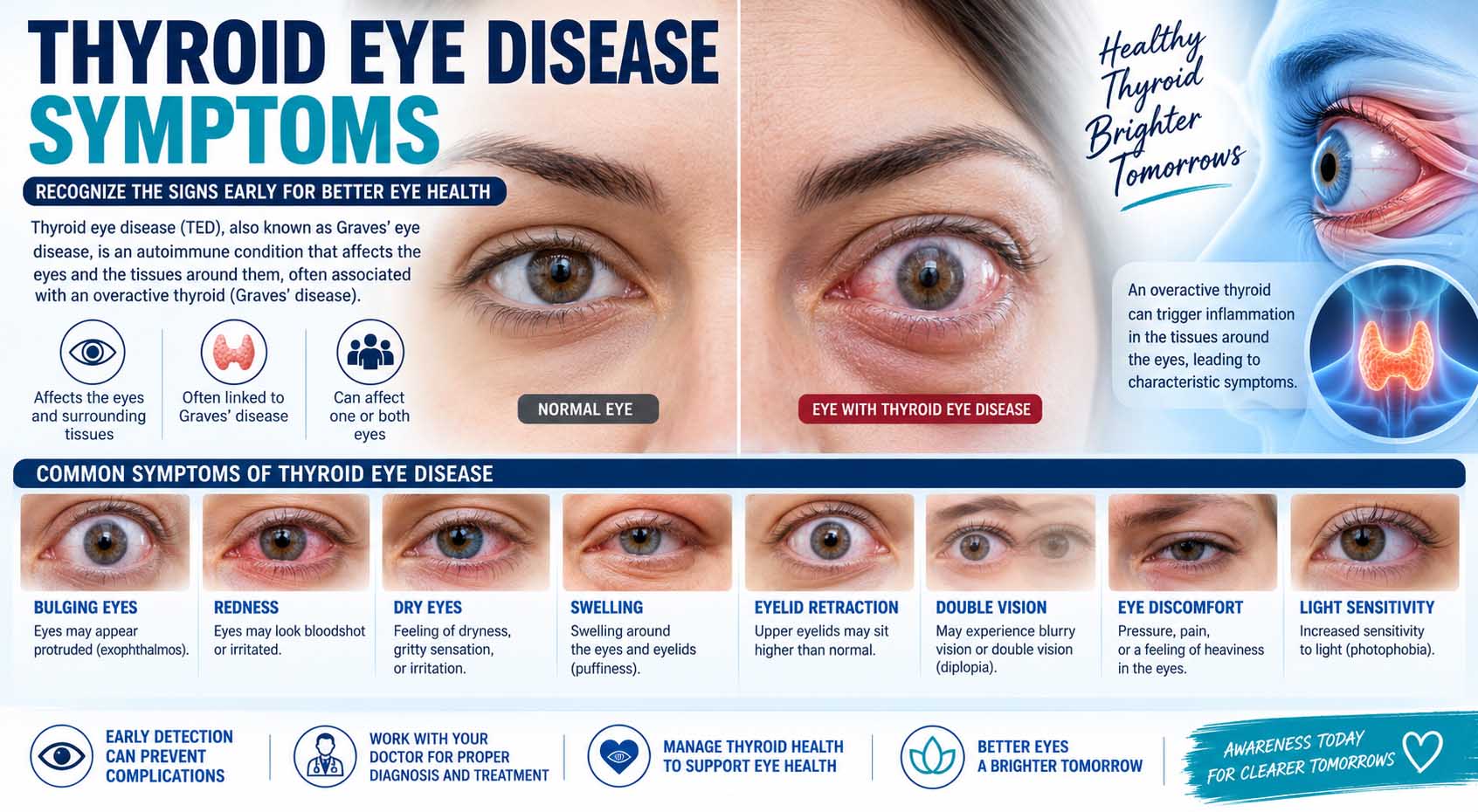
Eye irritation, swelling around the eyelids, double vision, or eyes that appear unusually prominent can sometimes be thyroid eye disease symptoms. Thyroid eye disease (TED), also called Graves’ eye disease or thyroid-associated orbitopathy, is an autoimmune condition in which inflammation affects tissues around the eyes. Although it commonly occurs in people with Graves’ disease, it can also occur in people with normal or low thyroid hormone levels. Because symptoms range from mild dryness to serious vision problems, recognizing changes early and getting proper eye care can make a meaningful difference.
What Is Thyroid Eye Disease?
Thyroid eye disease develops when the immune system mistakenly attacks tissues and muscles around the eyes. As inflammation develops, tissues inside the eye socket can swell.
Because the eye socket has limited space, swelling may push the eyeball forward. Meanwhile, inflammation and enlargement of the eye muscles can interfere with normal eye movement.
TED is closely associated with autoimmune thyroid disease, particularly Graves’ disease. However, thyroid hormone levels and eye disease activity do not always move together. Therefore, a person’s thyroid blood tests may be controlled while eye symptoms remain active.
TED usually has an active inflammatory phase followed by a more stable phase. The length and severity of these phases vary from person to person.
What Are the Main Thyroid Eye Disease Symptoms?
Common thyroid eye disease symptoms affect the eyelids, surface of the eyes, eye muscles, and tissues inside the eye socket.
Possible symptoms include:
- Dry or gritty-feeling eyes
- Red or irritated eyes
- Watery eyes
- Swollen eyelids
- Puffiness around the eyes
- Eyelid retraction
- Bulging or prominent eyes
- Sensitivity to bright light
- Pressure or discomfort behind the eyes
- Pain with eye movement
- Double vision
- Difficulty closing the eyelids completely
- Changes in color perception or vision in severe cases
Some people experience only mild irritation. However, others develop noticeable changes in appearance or eye movement.
Symptoms can also affect one eye more than the other. Therefore, asymmetry does not rule out TED.
Early Symptoms of Thyroid Eye Disease
Early symptoms of thyroid eye disease can resemble common problems such as allergies, dry eye, or lack of sleep. As a result, some people do not immediately connect their symptoms with thyroid disease.
Dryness and a gritty sensation are common early complaints. For instance, the eyes may feel as though sand or dust is trapped underneath the eyelids.
Redness can occur as well. Meanwhile, excessive watering may seem surprising because the eyes feel dry, yet irritation can trigger increased tear production.
The eyelids may also become swollen or appear unusually open. In some people, the upper eyelid sits higher than normal, which exposes more of the white part of the eye.
If persistent eye symptoms develop alongside known thyroid disease, tell your healthcare professional. Likewise, unexplained changes around the eyes deserve an appropriate examination even if you have never been diagnosed with a thyroid condition.
Bulging Eyes and Eyelid Changes
One of the most recognizable TED features is proptosis, often described as bulging or prominent eyes.
Inflamed tissues and increased volume inside the eye socket can push the eyeball forward. Consequently, the eyes may appear wider or more prominent than before.
Eyelid retraction can make this appearance more noticeable. Meanwhile, swelling around the upper or lower eyelids may change the shape of the eye area.
These changes should not automatically be treated as cosmetic concerns. For example, someone researching lower blepharoplasty before and after results because of lower-eyelid puffiness should first seek medical assessment if the change is new, unexplained, or accompanied by eye irritation, bulging, or thyroid problems.
In some cases, prominent eyes make complete eyelid closure difficult. As a result, the exposed eye surface may become dry and irritated, particularly during sleep.
Thyroid Eye Disease Signs and Symptoms Affecting Vision
TED can affect vision when swollen muscles interfere with normal eye alignment.
Double vision, also called diplopia, may occur because both eyes no longer move together normally. Initially, a person might notice double vision only when looking in certain directions.
As the condition changes, double vision may become more frequent. Consequently, everyday activities such as reading, driving, or using stairs may become difficult.
Blurred vision can also occur for several reasons, including severe dryness or exposure of the cornea. However, significant or sudden changes in vision require prompt medical assessment because they can have causes beyond TED.
In uncommon but serious cases, swollen tissues can compress the optic nerve. This complication can threaten vision and requires urgent treatment.
Eye Pain, Pressure, and Light Sensitivity
Not everyone with TED experiences significant pain. Still, discomfort and pressure behind the eyes can occur during the active inflammatory phase.
Some people notice discomfort when looking upward, downward, or sideways. Meanwhile, others describe a dull pressure rather than sharp pain.
Sensitivity to light can develop when the eye surface becomes irritated or dry. Consequently, bright indoor lighting or sunlight may feel uncomfortable.
However, severe eye pain should never automatically be blamed on thyroid disease. Other eye conditions can cause pain and require different treatment, so an eye examination is the safer approach when symptoms are significant or unusual.
Thyroid Eye Disease Symptoms in Females
Searches for thyroid eye disease symptoms female are common because autoimmune thyroid conditions, including Graves’ disease, occur more often in women. However, the basic eye symptoms of TED are similar regardless of sex.
Women may experience dryness, redness, eyelid swelling, prominent eyes, pressure, double vision, or difficulty closing their eyes.
At the same time, other hormonal changes can produce symptoms that overlap with general thyroid complaints, such as changes in energy, sleep, temperature tolerance, or menstrual patterns. For example, low estrogen symptoms can occur during hormonal transitions but should not be assumed to explain new eye bulging or double vision.
Therefore, healthcare professionals may evaluate thyroid function and other possible causes according to the person’s complete symptoms and medical history.
What Causes Thyroid Eye Disease?
TED results from abnormal immune activity involving tissues around the eyes. The exact biological process is complex, but certain immune reactions cause inflammation and changes in the eye muscles and connective tissues.
Graves’ disease is the strongest association. However, TED can occasionally develop in people with Hashimoto’s thyroiditis or in people whose thyroid hormone levels are within the normal range.
Smoking is an especially significant modifiable risk factor. People with TED who smoke tend to have a greater risk of more severe disease and poorer treatment response. Therefore, stopping smoking is one of the most useful lifestyle steps for someone diagnosed with TED.
Radioactive iodine treatment for hyperthyroidism can also worsen eye disease in some higher-risk patients. For that reason, treatment decisions should consider whether TED is present and how active it is.
How Doctors Diagnose Thyroid Eye Disease
Diagnosis generally begins with medical history and a detailed eye examination.
The clinician may examine eyelid position, eye movement, eye prominence, the corneal surface, visual acuity, color vision, and the optic nerve. Measurements can also help track changes over time.
Blood tests may assess thyroid function and, in some cases, thyroid-related antibodies. People wondering when is the best time to test for hormone imbalance should remember that suspected thyroid disease requires specific medical evaluation rather than relying on a general hormone-testing schedule.
If the diagnosis is unclear or symptoms are significant, imaging such as CT or MRI may help evaluate the tissues and muscles inside the eye socket.
An ophthalmologist and endocrinologist may work together because managing both the eye condition and underlying thyroid disorder can be necessary.
Active vs. Inactive Thyroid Eye Disease
TED commonly progresses through two broad stages.
During the active phase, inflammation is ongoing. Consequently, redness, swelling, discomfort, eyelid changes, and double vision may develop or worsen.
Later, the condition generally becomes inactive or stable. Inflammation decreases, although structural changes such as eye prominence, eyelid retraction, or double vision may remain.
This distinction matters because treatment choices can depend on disease activity. Anti-inflammatory or immune-directed treatments are generally considered during active disease when appropriate, while certain corrective surgeries are usually planned after the condition has become stable.
However, urgent problems such as optic nerve compression require treatment regardless of the usual timeline.
How Thyroid Eye Disease Is Treated
Treatment depends on severity, disease activity, thyroid status, and the specific structures affected.
For mild disease, doctors may recommend lubricating eye drops or gels to relieve dryness. Meanwhile, nighttime ointments may help when eyelids do not fully close.
Some people benefit from elevating the head during sleep to reduce morning swelling. Sunglasses can also help with light sensitivity and protect exposed eyes from wind.
Medical treatment may be needed for moderate or severe active disease. Depending on the individual case, treatment options can include corticosteroids or other therapies that target inflammation or immune activity. Certain patients may also be candidates for targeted medication specifically used for TED.
Surgery can sometimes be necessary. Depending on the problem, procedures may address pressure within the eye socket, eye-muscle alignment, or eyelid position.
Because treatment must match disease severity and activity, an ophthalmologist familiar with TED should guide these decisions.
When Thyroid Eye Disease Symptoms Need Urgent Care
Most TED symptoms do not suddenly threaten sight. However, certain changes require prompt medical attention.
Seek urgent eye care for:
- Sudden or significant vision loss
- Noticeably worsening vision
- New changes in color vision
- Severe inability to close the eye
- Significant corneal pain or damage
- Rapidly worsening eye symptoms
Changes in color perception can be particularly concerning when optic nerve compression is suspected. Likewise, worsening visual clarity should not simply be attributed to dry eyes without evaluation.
If you are unsure whether a symptom is urgent, contact an eye-care professional and describe the change rather than waiting for your next routine appointment.
Can You Manage Mild Symptoms at Home?
Home care can support medical treatment for mild symptoms, but it cannot replace professional evaluation.
Artificial tears may reduce dryness, while lubricating gel or ointment can provide longer-lasting moisture when recommended. Meanwhile, sunglasses may make outdoor activities more comfortable.
If morning swelling is troublesome, sleeping with the head slightly elevated may help some people.
Avoiding cigarette smoke is particularly worthwhile. If you smoke, ask a healthcare professional about evidence-based support for quitting.
Also, keep thyroid-related medical appointments and take prescribed medications as directed. Although controlling thyroid hormone levels does not automatically eliminate TED, stable thyroid function remains an important part of overall care.
Frequently Asked Questions
What are the symptoms of thyroid eye disease at first?
Early symptoms may include dry, gritty, red, or watery eyes, eyelid swelling, light sensitivity, and discomfort around the eyes. However, symptoms vary considerably between individuals.
Can thyroid eye disease affect only one eye?
Yes. Although TED can affect both eyes, one eye may be noticeably more affected than the other. Therefore, uneven eye prominence or eyelid position can occur.
Does thyroid eye disease always cause bulging eyes?
No. Mild TED may primarily cause dryness, irritation, swelling, or eyelid changes without obvious eye bulging.
Can you have thyroid eye disease with normal thyroid levels?
Yes. Although TED most commonly occurs with Graves’ disease, eye disease can sometimes appear when thyroid hormone levels are normal or in association with other autoimmune thyroid conditions.
Is thyroid eye disease permanent?
The inflammatory phase often settles over time, but some structural changes can remain after the disease becomes inactive. Treatment options may help manage persistent problems, depending on their severity.
Can thyroid eye disease cause blindness?
Severe vision loss is uncommon, but TED can threaten sight if the optic nerve becomes compressed or the cornea becomes seriously damaged. Therefore, changes in vision or color perception require prompt assessment.
Take New Eye Changes Seriously
Many thyroid eye disease symptoms begin with seemingly ordinary problems such as dryness, redness, puffiness, or irritation. However, persistent eyelid changes, prominent eyes, pressure, double vision, or difficulty closing the eyes deserve medical evaluation, particularly in someone with Graves’ disease or another thyroid condition.
If symptoms are mild, supportive measures may improve comfort while your healthcare team monitors the condition. However, worsening vision, changes in color perception, or serious problems closing the eye need faster assessment.
Most importantly, do not try to diagnose TED from appearance alone. An ophthalmologist can examine the eye structures, assess vision, and determine whether thyroid eye disease or another condition is responsible.